
 Bitaigen Research
At the end of 2024, Vancouver Mayor Ken Sim introduced a motion aimed at “diversifying the city’s financial reserves to protect purchasing power—becoming a Bitcoin‑friendly city.” The proposal called for the inclusion of Bitcoin (BTC) assets in the municipal reserve portfolio. In the city council vote, the motion passed with six votes in favor and two against, marking the first attempt by the municipality to list a digital currency among its public‑finance tools.
However, the city’s Finance and Supply Chain Management Department, led by General Manager Colin Knight, subsequently re‑examined the proposal. Under the Vancouver Charter, Bitcoin does not fall within the definition of “permitted investments.” In an update report released on Monday, the department explicitly stated that the $69,960 worth of Bitcoin failed to meet the charter’s requirements. Staff recommended merging this motion with other related agenda items to re‑prioritise resource allocation, and the final decision was scheduled for a vote at the council meeting on Tuesday.

Source: Vancouver City Council
In this article we dissect Vancouver’s innovative attempt to place Bitcoin into its municipal reserves and the subsequent legal roadblock that forced the plan to be halted. By tracing policy documents, council debates, and the regulatory framework, we help readers understand the practical obstacles digital assets face when entering public finance and the possible pathways forward. If you want to know why the “Bitcoin‑friendly city” experiment came to an abrupt end, keep reading.
Bitcoin's inflation‑hedge argument wanes in the bear market
When the motion was first introduced, Mayor Sim emphasized that Bitcoin’s capped supply of 21 million coins positions it as “digital gold,” potentially offering a hedge for city finances in an inflationary environment. The motion text read: “As an open, decentralized, and secure digital asset, Bitcoin has been recognised by many financial experts and analysts as a potential hedge against inflation and currency depreciation.”
Recent extreme volatility in the crypto market has weakened that narrative. After Bitcoin surged past the $126,000 level in October 2025, the price has fallen roughly 50 % to the levels seen at the end of 2024, briefly touching the $60,000‑ish low before stabilising.
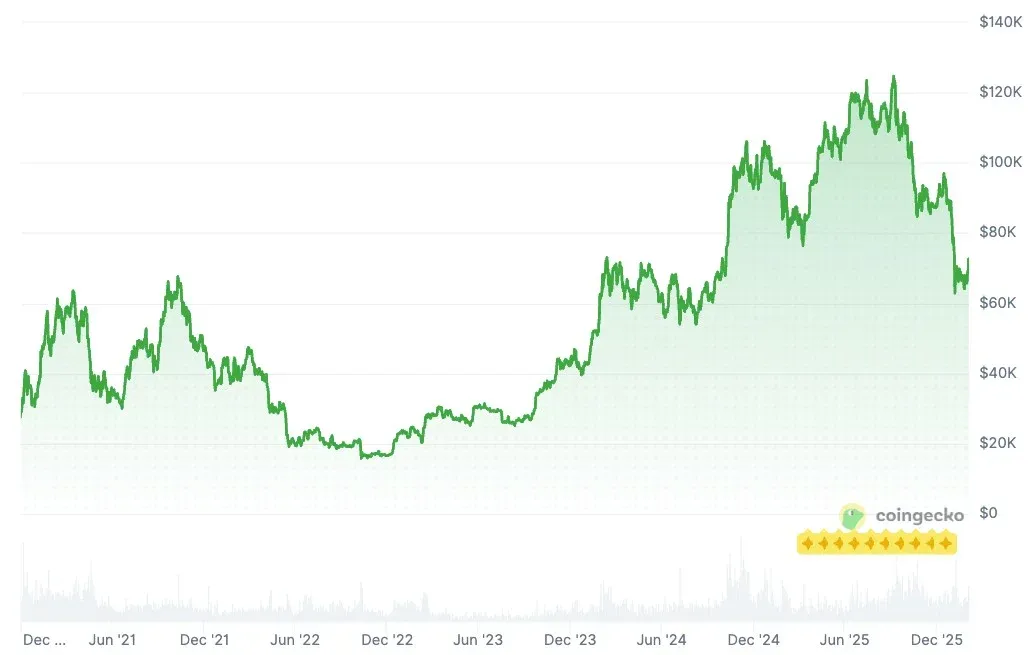
Bitcoin (BTC) price chart since the end of 2020. Source: CoinGecko
While some analysts remain skeptical about Bitcoin’s ability to truly act as “digital gold,” macro‑economist Lin Alden expressed a relatively optimistic view on a recent episode of the New Era Finance podcast: “If I had to choose between Bitcoin and gold for a bet over the next two or three years, I would pick Bitcoin.”
In summary, Vancouver’s plan to incorporate Bitcoin into its municipal reserves has been blocked at the governmental level due to the charter’s restrictions. For further updates on the city’s Bitcoin reserve proposal, follow the coverage from Bitaigen.
💡 Register on Binance with referral code B2345 for the maximum trading fee discount. See Binance complete guide.



