
 Bitaigen Research
In this article we compile the key clues disclosed in recent court filings, dissect the possible motives behind the “10 a.m. sell pressure,” and examine the potential impact on Bitcoin’s price action. By interpreting quantitative‑trading behavior and information asymmetry in depth, we help readers decide whether this really is a market “timed bomb” and provide reference points for future market assessment.
Lawsuit triggers the disappearance of sell pressure
On February 23, 2026, while the market remained anxious about the alleged sell‑off that usually occurs at 10 a.m. Eastern Time, the bankruptcy trustee of Terraform Labs, Todd R. Snyder, filed an 83‑page complaint in the United States District Court for the Southern District of New York. The filing attracted broad attention.
The complaint does not target the recent dip in Bitcoin; instead it looks back to the Terra/Luna collapse of 2022, which erased roughly $40 billion in value. The document specifically names Jane Street, accusing the quantitative‑trading giant of exploiting an extreme information advantage during the Terra episode to secure abnormal profits.
Further, the complaint reveals an internal communication channel dubbed “The Back channel.” Former intern Bryce Pratt is alleged to have obtained a critical internal alert through private means on the eve of Terra’s de‑peg, enabling Jane Street to liquidate its UST holdings within ten minutes before the market crash and to execute a rapid short‑position reversal.
After these accusations surfaced, the massive sell orders that historically appeared each day at 10 a.m. Eastern Time vanished almost overnight, and the order book turned unusually calm. Although this phenomenon does not directly prove that Jane Street is the hidden hand behind Bitcoin’s 10 a.m. price drops, the sheer number of puzzling details has refocused market scrutiny on the firm.
Precision‑timed price impact
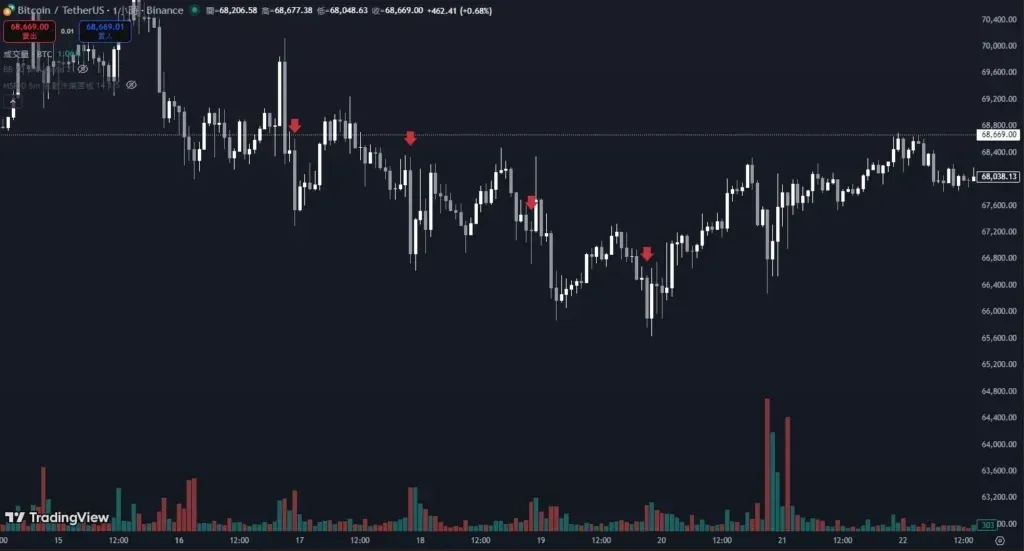
Over the past six‑to‑twelve months, a subset of market participants has observed a disconcerting pattern: around 10 a.m. ET, Bitcoin often experiences a brief bout of selling pressure.
The effect peaked in February 2026. Starting on Monday, February 16, for five consecutive trading days Bitcoin appeared to be set with a “timed bomb”: each day the price slipped by about 1,000 points near the 10 a.m. mark before quickly rebounding, a behavior that seemed calibrated to trap traders holding leveraged long positions.
Why this specific time?
9:30 a.m. ET marks the opening of U.S. equity markets. The window that follows up to 10 a.m. is the period of peak liquidity and concentrated volume across major exchanges. An entity capable of delivering a precise impact during this narrow interval would almost certainly possess substantial capital or resources, prompting speculation that institutions linked to a Bitcoin ETF might be acting with malicious intent.
Cascade liquidation of leveraged longs
A 1 %–2 % dip at 10 a.m. may appear modest, but it is enough to trigger stop‑loss orders on high‑leverage long positions. Once the first wave of stops is hit, an exchange’s matching engine can automatically liquidate additional longs, creating a chain reaction. Shortly thereafter, a flood of buy orders—often from the same large players—pushes the price back to its prior level, leaving the daily chart looking essentially unchanged.
The prime suspect: Jane Street
In a market as massive as Bitcoin, retail participants lack the firepower to generate precise, short‑duration price shocks on their own. Consequently, attention naturally shifts to institutions that have both the capital and the operational infrastructure—most notably Jane Street.
The institution that controls the IBIT lifeline
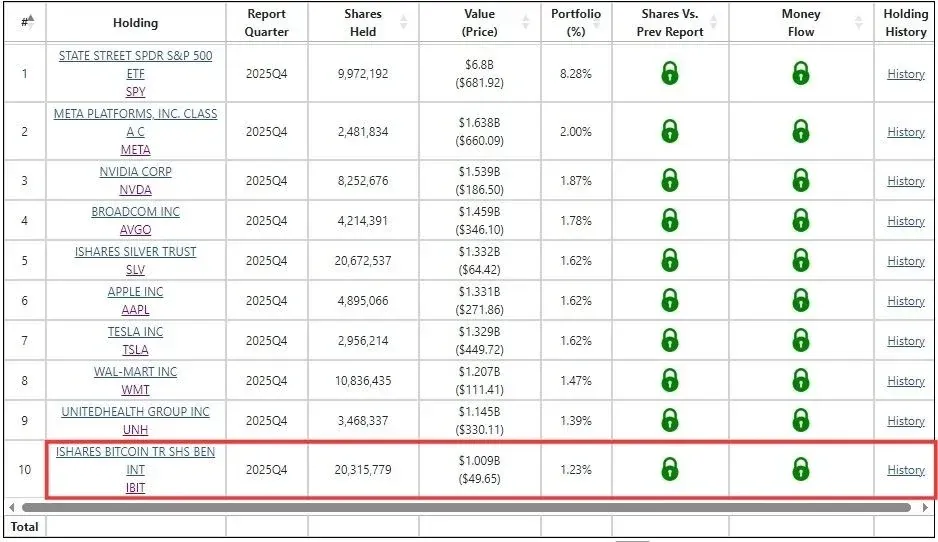
Jane Street’s market influence is largely derived from its role as an authorized participant (AP) for BlackRock’s Bitcoin Spot ETF (ticker: IBIT). According to the 13F filing disclosed early 2026, Jane Street at one point held over 20 million IBIT shares, worth several billion USD. Such a stake not only makes the firm a major market participant but also grants it decisive sway over liquidity provision and ETF creation/redemption mechanics.
As an AP, Jane Street can directly request the creation or redemption of ETF units from BlackRock. When retail or institutional investors buy or sell large blocks of the ETF on secondary markets, the AP must hedge the corresponding exposure in the spot Bitcoin market. This operational requirement creates a clear pathway through which the firm could, intentionally or unintentionally, affect Bitcoin’s price.
Information asymmetry from a “god‑view”
Beyond raw capital, Jane Street enjoys an information advantage that allows it to anticipate institutional cash flows. As an authorized participant for BlackRock, it often receives market intelligence ahead of the broader investing public.
Armed with such foresight, critics allege that Jane Street can predict redemption pressure for the ETF on a given day, sell Bitcoin in the spot market beforehand, and then repurchase at a lower price after the redemption‑induced price drop, thereby capturing a spread.
A track record that cannot be ignored
Skepticism toward Jane Street is not unfounded. In July 2025, the Securities and Exchange Board of India (SEBI) imposed a temporary ban on short‑term trading for the firm and levied a hefty fine, accusing it of aggressive, market‑interfering trades in Indian derivatives. This episode raised a broader question among crypto‑industry participants: if the firm can manipulate relatively well‑regulated traditional markets, might the comparatively lax regulatory environment of crypto assets provide an even more fertile ground for similar behavior?
---
*This report is provided for informational purposes only and does not constitute investment advice or a basis for any trading decision. All data, analysis, and opinions cited are based on the author’s research and publicly available sources and may be subject to change or uncertainty. Readers should assess their own risk tolerance and financial situation before making any investment choices. For personalized guidance, consider consulting a qualified professional.*
*Please note that cryptocurrency gains may be taxable in your jurisdiction; consult local tax regulations or a tax advisor for details.*
*U.S. readers wishing to trade on cryptocurrency exchanges should use Binance.US rather than the global Binance platform. For fiat deposits and withdrawals, the most common methods are USD via ACH or wire (SWIFT/SEPA), depending on your country of residence.*
The above constitutes the full analysis of “Bitcoin timed bomb: Does a mandatory dip at 10 a.m. every day become a curse?” For more Bitcoin‑related news, follow Bitaigen and explore its other articles.
💡 Register on Binance with referral code B2345 for the maximum trading fee discount. See Binance complete guide.



